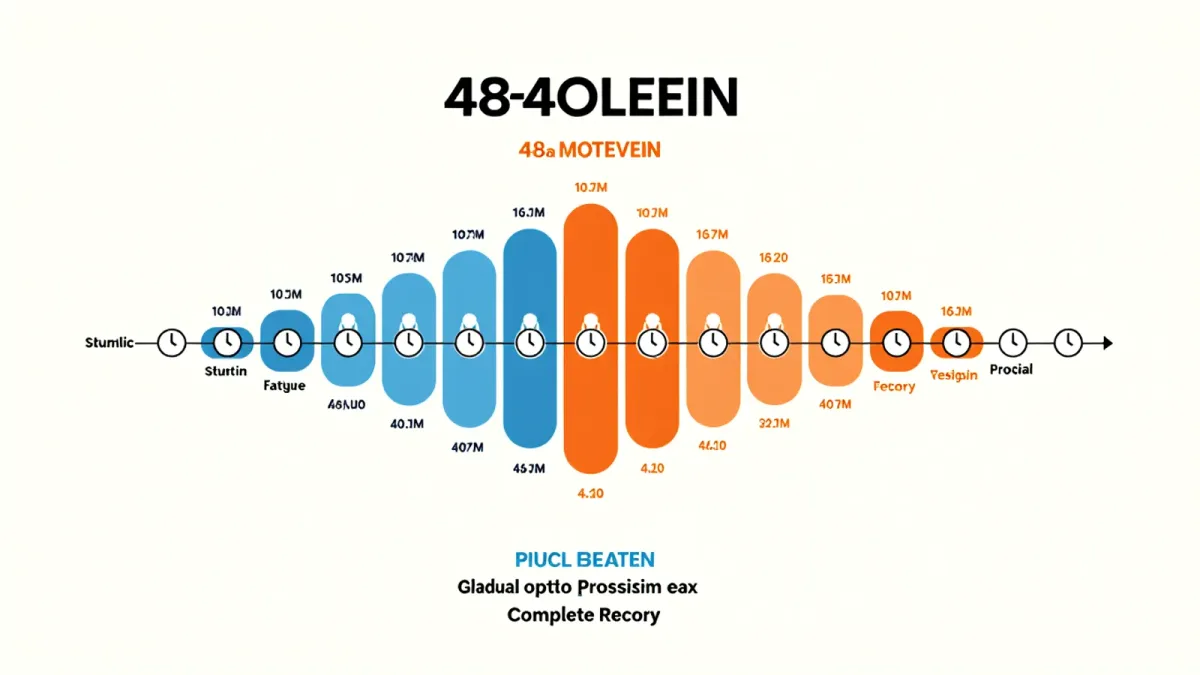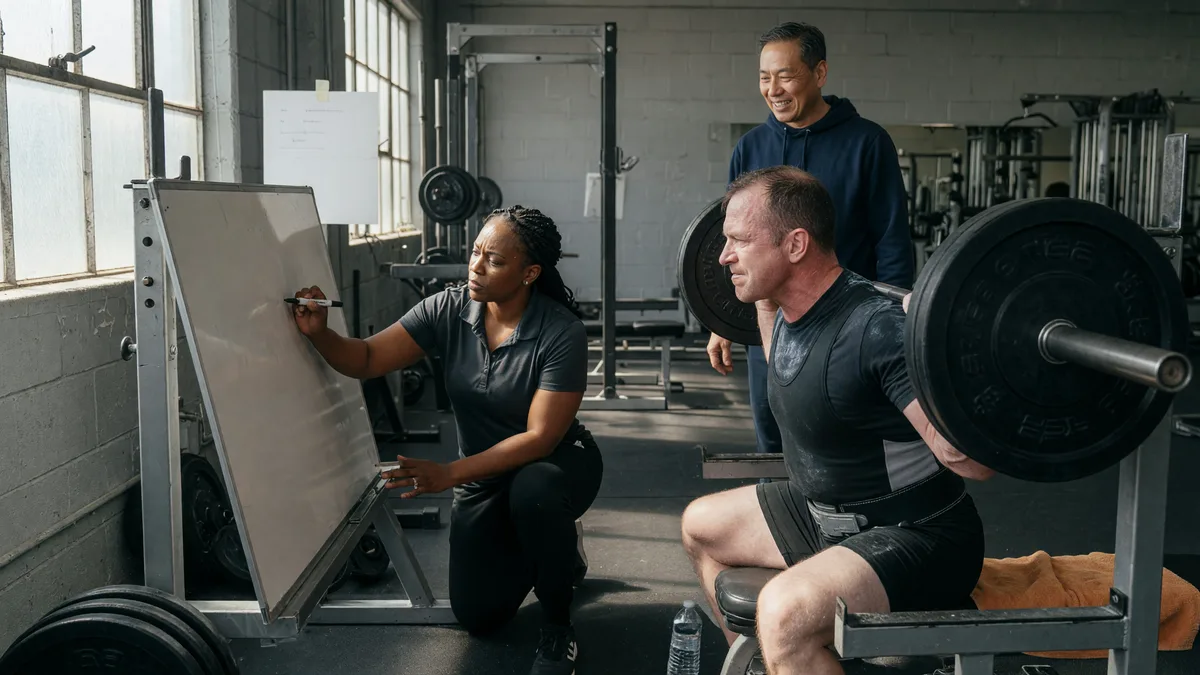
How often you train a muscle matters less than how much total work that muscle gets. The honest reading of the evidence is that training frequency — the number of sessions per week that touch a given muscle — is mainly a distribution tool. Spread the same weekly volume across more sessions and you may recover a little better and practice your lifts a little more. But frequency itself does not appear to be the driver of growth.
That qualification matters, because the internet often treats frequency as a dial you can turn for extra gains. The stronger claim in the literature is simpler: total weekly volume, hard sets taken close to failure, drives hypertrophy. Frequency decides how that work is packaged. If two lifters do the same number of hard sets for the same muscles in a week, the one who splits them across three sessions is not automatically growing more than the one who uses two.
Where frequency does earn its keep is quality. Fatigue accumulates within a session. By your tenth hard set for a muscle, the last sets are lower quality than the first. Splitting the work lets each session start fresher, which is why many coaches describe frequency as a way to make volume easier to absorb. As Cambridge Dictionary notes, "many" simply means a large number of something — and frequency debates often boil down to exactly that: how many sessions, doing what, at what cost to recovery.
What does the research actually say about frequency?
Read the frequency trials with a coach's eye and a pattern emerges. When researchers match total weekly volume between groups, the advantage of higher frequency is usually small or absent. When higher-frequency groups happen to do more total work, they often grow more — but the extra volume, not the extra sessions, is the likelier cause. That confound is the single most important thing to know about this literature.
There is a second, more defensible case for spreading work out. A muscle that gets a growth stimulus and then sits idle for most of the week may not use the whole window. The exact duration of that window is still debated, and the honest position is that we do not know it precisely. What we can say is that a moderate rhythm — touching each muscle more than once a week — is a reasonable default, not because it is proven superior, but because it is hard to argue with on practical grounds.
Our analysis: treat frequency claims promising dramatic extra growth with suspicion. The effect, where it exists, is a modest refinement, not a new program.
How does training age change the answer?
Beginners need frequency for a different reason than advanced lifters. A newer lifter's main job is practice — learning the squat pattern, the hinge, the press. More frequent, shorter sessions mean more quality repetitions of the skill, and that alone justifies hitting the basics several times a week. Volume is low anyway at this stage, so recovery is rarely the constraint.
Intermediate and advanced lifters face the opposite problem. Their weekly volume for each muscle is higher, and cramming it into one or two sessions creates long, grinding workouts where later sets suffer. Here, splitting the work across more days is less about a growth signal and more about preserving set quality. A lifter managing a nagging elbow or shoulder often finds the same logic applies: less load per session, same total work, fewer flare-ups.
The practical takeaway is that training age shifts the reason for frequency, not the principle. Beginners use it for practice. Advanced lifters use it for fatigue management.
What this means for your weekly split
Frequency is a scheduling decision, and scheduling should serve your life first. A full-body plan three times a week and a body-part split over five days can deliver identical weekly volume to every muscle. Neither is inherently better. The better plan is the one you will actually repeat for months — consistency beats optimization, as the saying goes among coaches who have watched enough programs fail on adherence alone.
Two quality variables interact with frequency and deserve as much attention. Rest between sets shapes how much work each set represents, which our guide on rest between sets for strength and size covers in detail. And the longer structure of your plan — how volume and intensity wave across weeks — matters more than the weekly packaging, which is the territory of choosing a periodization model.
If you are rebuilding around an injury or persistent discomfort, frequency decisions belong in a conversation with a qualified professional. General information like this article is not individualized programming, and it is not medical advice.
Does higher frequency help strength as much as size?
Strength has an extra ingredient: skill. Heavy lifting is a practiced movement, and practicing it more often tends to help. That is why powerlifters often squat, bench, or pull several times a week even at modest volume per session. The frequency serves technique under load as much as it serves tissue.
For general strength and muscle, the practical answer overlaps: more frequent exposure to the main lifts, at manageable doses, is a sensible default. But the same caveat applies. If higher frequency forces you to cut total volume because your schedule cannot carry five gym days, you have traded a real variable for a scheduling preference.
Practical steps for choosing your frequency
- Fix your weekly volume target first. Decide how many hard sets each major muscle needs this phase, based on your experience level and recovery. Frequency comes second.
- Split so each session stays high quality. If your last sets for a muscle are consistently much weaker than your first, spread the work across more days.
- Match the schedule to your calendar. Three sessions you never miss beat five you abandon. Adherence is the variable that outlives every optimization.
- Change one thing at a time. If you move from two to three sessions per muscle per week, keep volume and intensity constant for several weeks so you can judge the change honestly.
- Reassess by recovery, not soreness. Soreness is a poor progress meter. Performance trends across weeks tell you whether the frequency is working.
Supporting variables still matter. What you do outside the gym — including basic supplementation with reasonable evidence behind it, covered in our piece on creatine and muscle growth — operates on the same principle: modest, well-supported effects, not transformations. For related coverage, see What the Research Says About Creatine and Muscle Growth.
Where does this leave the frequency debate?
The evidence establishes that frequency is subordinate to volume, that matched-volume comparisons rarely show large frequency effects, and that higher frequency earns its place through set quality, skill practice, and schedule fit. What remains unknown is the precise recovery window after a session and whether small frequency advantages exist for specific populations. Anyone promising more than that is selling a program, not summarizing research.
For most readers, a middle path is the defensible choice: hit each muscle at least twice a week if your calendar allows, keep total volume the priority, and stop treating frequency as the variable that will unlock growth the work itself has not delivered.