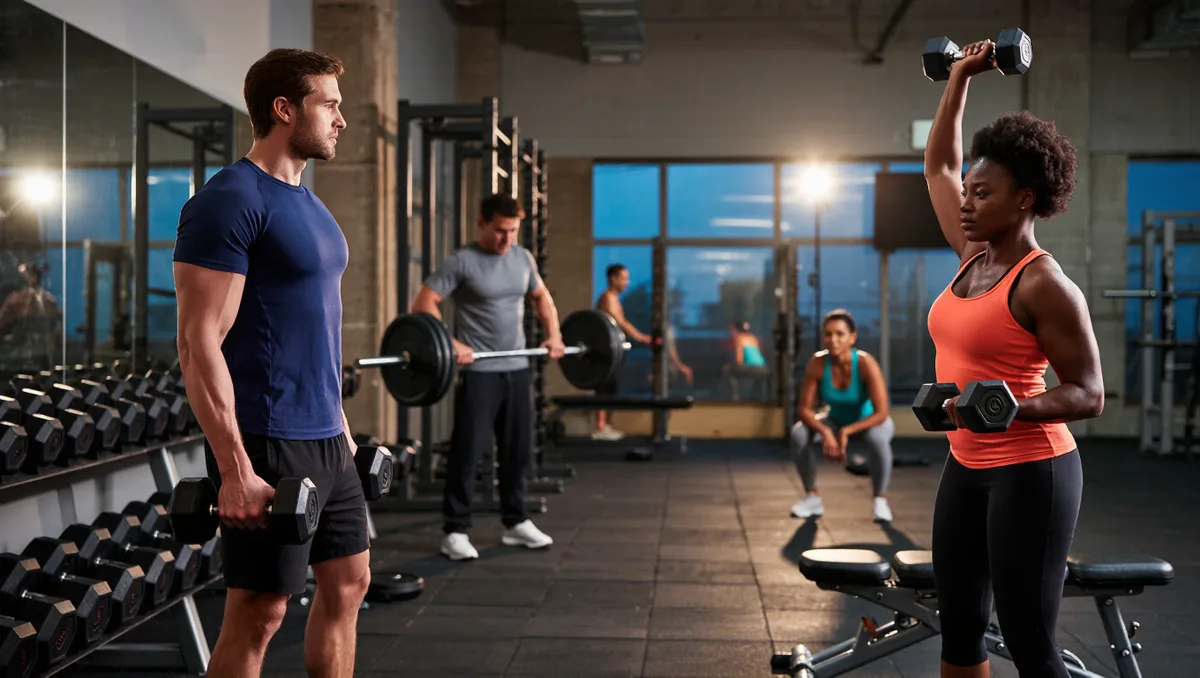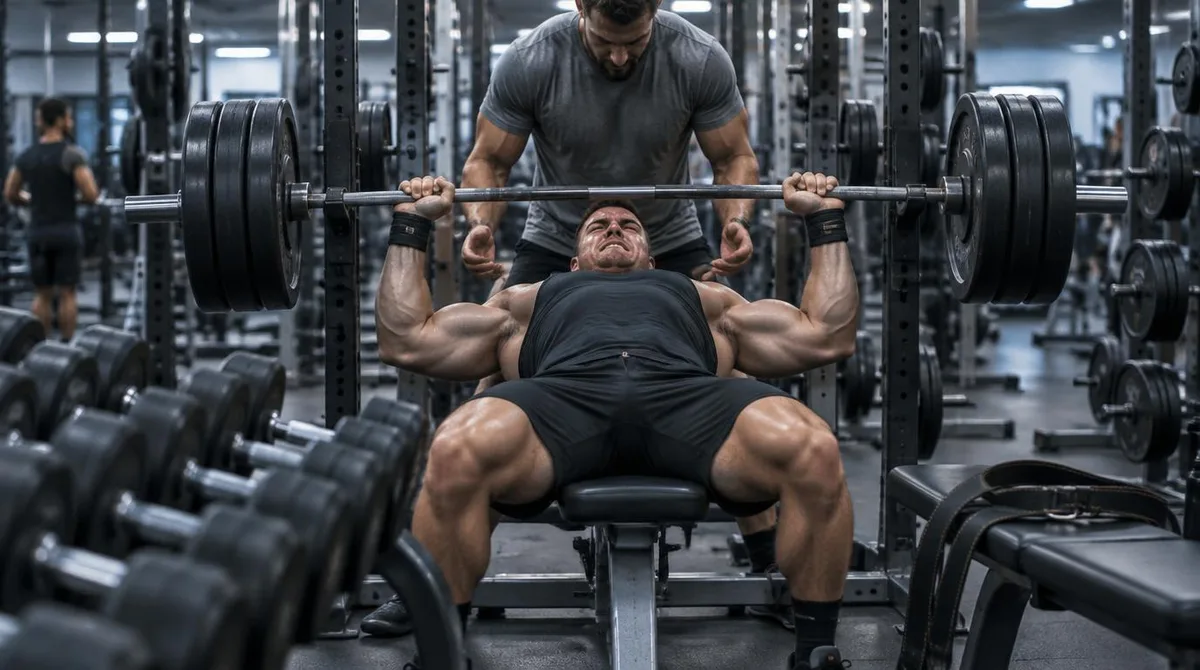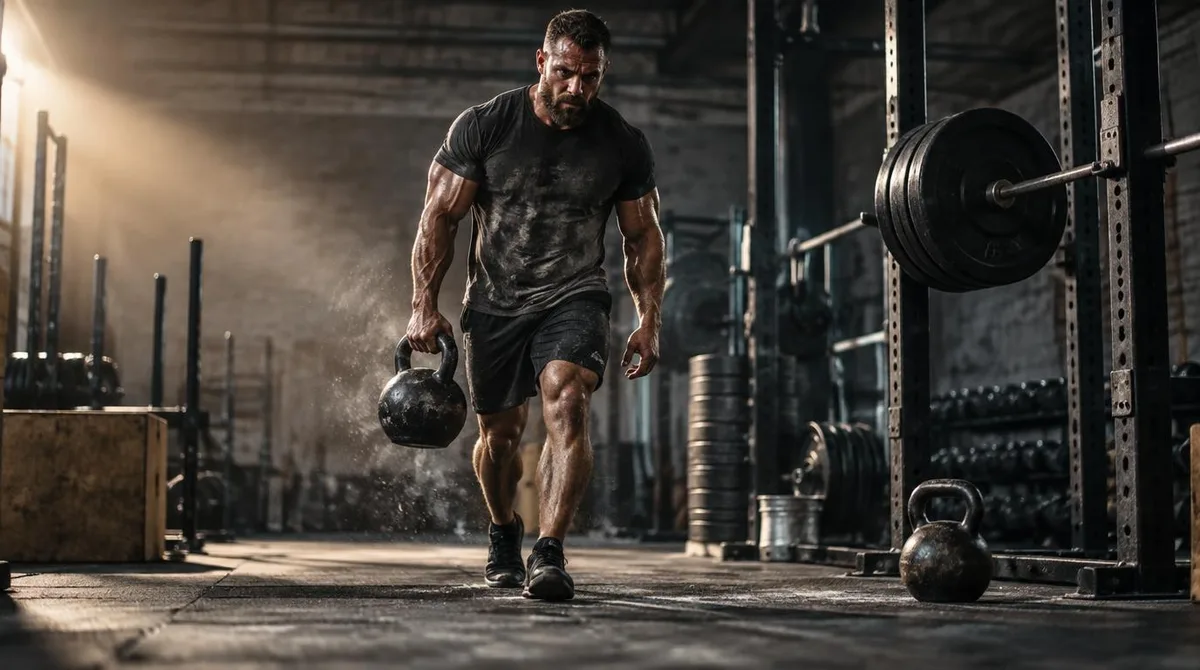
Functional strength training is strength training built around movements you actually perform, rather than around isolated muscles. Think squats, carries, pushes, pulls and hinges instead of single-joint machine work done only for its own sake. The honest qualification: the label itself has no formal, universally agreed definition in exercise science, which is part of why it gets attached to almost everything.
The word at the center of it is doing a lot of work. According to Dictionary.com, "functional" means practical rather than decorative, or capable of serving the purpose for which something was designed. Applied to training, that purpose is your life and your sport. If a lift makes you better at the things you need to do, it is functional by that plain reading. If it only makes a muscle look bigger in the mirror, it is decorative by the same standard.
That definition matters because "functional" has become one of the most overused words in fitness. Kettlebells get called functional. Balance boards get called functional. A machine with a rope attachment gets called functional. The word alone tells you nothing. What tells you something is the movement, the load, and whether the training matches the task you are preparing for.
Where did the term come from, and why is it so slippery?
The idea grew out of a reasonable observation. Traditional bodybuilding splits isolate muscles, but daily life and sport rarely ask one muscle to work alone. Lifting a suitcase, climbing stairs and sprinting all require several muscle groups to cooperate, in a specific sequence, under load. Training that mirrors those demands, the argument goes, should transfer better to them.
The trouble is that "mirrors the demand" is subjective. A physical therapist, a powerlifter and a golfer would each describe functional training differently, because their tasks differ. The dictionary sense of the word, practical and purpose-built, per Dictionary.com, is only useful once you name the purpose. Without a named task, "functional" is a mood, not a method.
There is also a commercial wrinkle worth naming plainly. A label that promises real-world carryover sells equipment and classes. That does not make every functional claim false, but it means the word should prompt a question, not end one.
What actually makes an exercise "functional"?
Strip away the marketing and most serious descriptions of functional training cluster around a few features. None of them is magic on its own. Together, they describe training aimed at a task rather than at a muscle.
- Multi-joint movements. Exercises that use several joints at once, such as squats, deadlifts, rows and presses, resemble the coordinated actions of daily life more closely than single-joint isolation work does.
- Load in sensible positions. Carrying weight in your hands, on your back or at your side trains the trunk and grip in ways that resemble real objects, which rarely come with a padded handle and a fixed movement path.
- Control of your own body. Movements such as lunges, step-ups and push-ups require you to stabilize yourself, which is closer to how you move outside the gym than a machine that stabilizes for you.
- Relevance to the target task. The strongest version of the principle is specificity: the closer the training movement matches the speed, direction and demands of the task, the more directly it should carry over.
Notice what is missing from that list: instability gadgets, exotic equipment and any single brand of exercise. A barbell squat is functional for a hiker who climbs steep trails. A leg extension machine is functional for someone rehabbing a knee under professional supervision who needs isolated quadriceps work. Context decides.
What does the evidence say about transfer to daily life and sport?
Here is where honesty requires restraint. The retrieved material for this article does not include specific trials measuring how well functional training transfers to daily tasks, so this article cannot quote effect sizes or sample sizes on that question, and it will not invent them. What can be said is structural, and it follows from how training adaptation works.
Strength gains are partly specific to the movement patterns you train. That is a long-standing principle in exercise programming, and it is the same logic behind the supercompensation model of how training adaptation works: the body adapts to the demands you place on it. Train a pattern with load, and that pattern gets stronger. Train only isolated muscles, and coordination between them gets less direct attention. We covered a connected angle in Supercompensation: How Training Adaptation Actually Works.
The flip side deserves equal weight. Free-weight and multi-joint training is not automatically superior for building muscle or raw strength. Fixed-path machines allow heavy, safe loading of specific muscles, and that can be exactly what a lifter needs. The reasonable reading is that both tools have a place, and the "functional versus machine" framing is mostly a false choice.
For sport, specificity matters even more, but so does the strength base underneath it. A useful way to think about it: general strength training raises your capacity, and sport practice teaches you to apply it. Neither replaces the other. If you want the physiological background on why muscles respond differently to different demands, our piece on what makes muscle fiber types matter in sport covers that ground.
What does a sensible functional workout look like?
A practical template does not require exotic equipment. Most coaches who use this style of training build sessions around a small set of movement patterns, loaded progressively. A simple structure looks like this:
- A squat or hinge. Something that loads the legs and hips through a bending pattern, such as a goblet squat or a deadlift variation.
- A push. Pressing weight away from the body, standing or lying, with dumbbells, a barbell or your own bodyweight.
- A pull. Rowing or pulling weight toward the body, which balances the push and trains the back and grip.
- A carry. Walking with weight in one or both hands, which loads the trunk and grip under a realistic demand.
- Progressive load over time. Adding weight, reps or control gradually, because a movement pattern only keeps adapting if the demand keeps rising.
That list is deliberately generic, because the right loads, sets and progressions depend on your training history, injuries and goals. This article is information, not individualized programming. For personal decisions, especially with an injury history, work with a qualified professional.
One more practical note: consistency beats optimization. A simple pattern-based plan you follow for months will outperform a cleverly "functional" plan you abandon in three weeks. That is the least glamorous finding in fitness, and the most reliable one.
Our analysis: judge the workout, not the word
The useful takeaway is to treat "functional" as a claim to be tested, not a guarantee. When a class, program or product uses the label, ask three questions. What task is this supposed to improve? How does the training resemble that task? And is there progressive load, or just novelty? If the answers are vague, the word is decoration.
If the answers are concrete, you are probably looking at a reasonable program, whatever it calls itself. The best functional strength training is simply well-chosen strength training aimed at your life. It was a good idea before it was a marketing category, and it will still work after the buzzword moves on.
The bottom line
Functional strength training means training movements and tasks rather than isolated muscles, with the goal of carrying strength into daily life or sport. The term has no single formal definition, so the label alone proves little. Multi-joint lifts, carries and bodyweight control, loaded progressively, form the practical core. Machines are not the enemy; irrelevance is. Choose exercises for the job you need them to do, and let the word "functional" matter less than the program behind it.