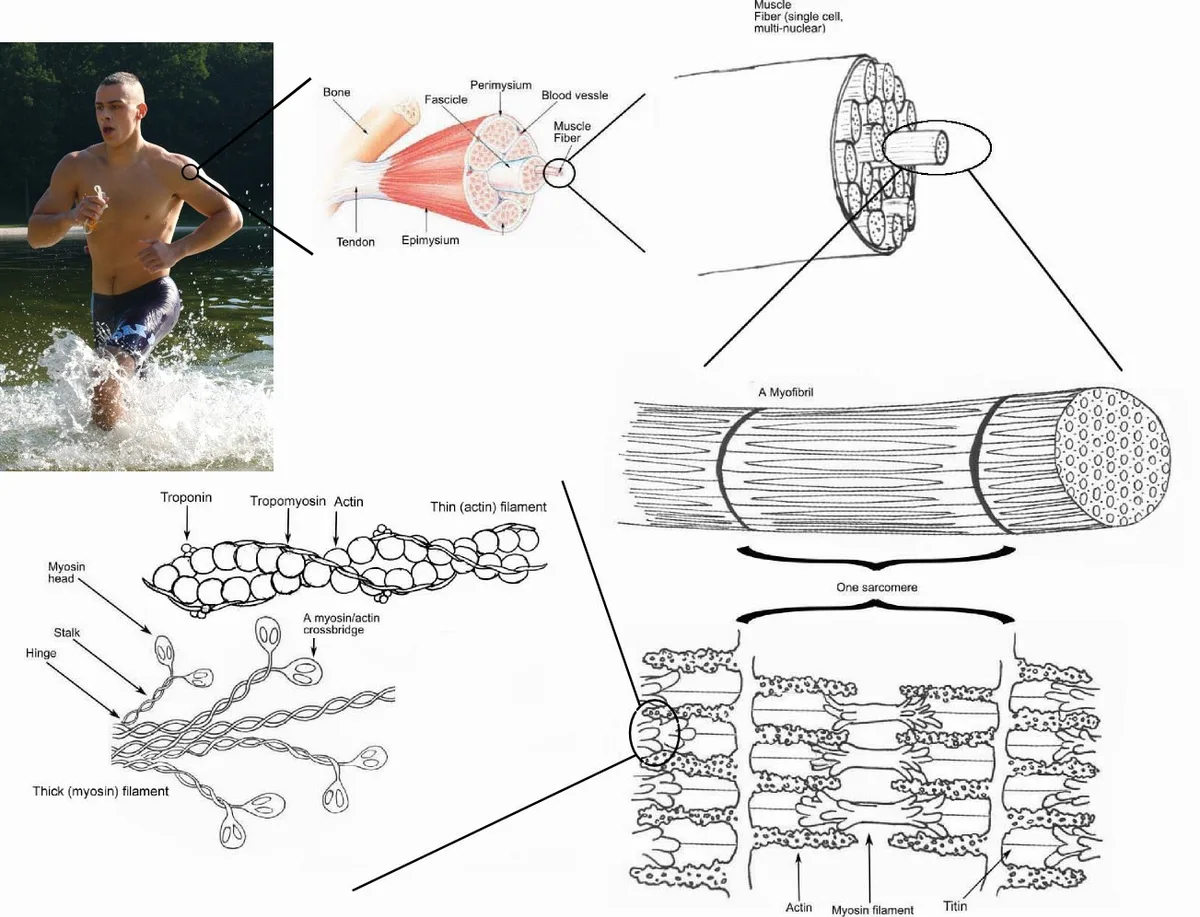
Take a few months off the gym and the fear kicks in fast: all those months of training, gone. Here is the good news. Something real sticks around, and it has a name. Muscle memory is the reason returning to training feels so much easier than starting from zero.
The term covers two related things. One is about movement skill, stored in the brain. One is about the muscle tissue itself. Both help you rebuild after a break, and research on detraining backs up what returning lifters feel.
The Skill You Never Fully Forget
Muscle memory is a form of procedural memory. You build it by repeating a movement until the brain can run it with little to no conscious effort. According to Wikipedia's article on muscle memory, this is why skills like riding a bike or swimming feel automatic even after a long time away from them.
The effect can last a remarkably long time. One of the earliest studies of skill retention showed savings in relearning typing skills after a 25-year period with no practice. Similar findings have been replicated many times. That is why familiar lifts feel natural again within a session or two of coming back.
What Happens When You Stop Training
Detraining does shrink muscle and drop strength. In one line of research, previously untrained people completed 7 weeks of resistance exercise. They gained significant skeletal muscle mass in the vastus lateralis, a key muscle of the quadriceps group. After a similar 7-week period of physical inactivity, strength and muscle mass returned to baseline.
So the size went away. What happened next is the interesting part.
The Regain Advantage
When those same participants trained a second time, they adapted in an enhanced manner. They gained more skeletal muscle mass than they had in the first period. Researchers link this to epigenetics. In the first training block they found big changes in DNA methylation, with over 9,000 CpG sites showing reduced methylation. Those changes were sustained through the period of inactivity. On the second exposure to training, over 18,000 sites showed the same change. We covered a connected angle in How Heat Training Changes Endurance, According to Researchers.
In plain language, training appears to leave marks on the switches that control your genes. The marks wait while you rest. Related work on high-intensity interval training found epigenetic changes that persisted after a 3-month detraining period. Fitness measures such as VO2max had returned to pre-training levels, yet the marks stayed.
How to Use Muscle Memory
First, do not fear the break. Life happens, and time off costs less than most people think. Second, when you come back, start lighter than your old numbers but expect fast progress. Your nervous system remembers the lifts, and your muscle tissue has a head start.
What does coming back look like? Pick weights that feel smooth, and add a little each week. The first weeks will surprise you. That fast return is your muscle memory doing its job.
Third, use this knowledge to build habits that survive busy seasons. Two short sessions a week that you never skip will protect far more fitness than heroic plans you abandon.
Conclusion: The Foundation Stays
Muscle memory is real, and it works on two levels. Movement skills stay stored in the brain. Training also leaves lasting epigenetic marks that speed up regrowth. Detraining takes some of your gains, but it does not take the foundation. When you return, you are never truly starting over. Readers following this should also see Supercompensation: How Training Adaptation Actually Works.
This article is general information, not medical advice. Talk with a qualified healthcare provider or coach about your training.