The most detailed popular study of captaincy — Sam Walker's The Captain Class (2017), which analyzed thousands of elite teams across sports — found the best captains were rarely the best players or the loudest voices; they were relentless standards-setters who led through deeds, defended teammates and pushed in the unglamorous margins. It is a journalistic analysis, not a controlled trial, but it converges with a large organizational-psychology literature on shared leadership and team cohesion: teams perform better when influence is distributed and trust is high, and one formally appointed leader is only one node in that network.
ELITE SPORTS MAG publishes information, not coaching advice. Team decisions belong to coaches and qualified staff.
What did Walker's analysis actually claim?
Walker, a former Wall Street Journal sports columnist, screened winning dynasties across dozens of sports and eras, then looked for what their rosters shared. His finding: the persistent common factor was a captain with a cluster of unglamorous traits — extreme durability and willingness to do thankless work, a tendency to lead by demonstration rather than oratory, a readiness to confront management or star teammates in defense of the group, and low ego off the field. Notably, his top captains were often not the most talented athletes on their teams. The claim is a pattern in historical data, honest about what it is: retrospective, selective and untestable — but unusually well-researched for its genre.
What does the coaching-science literature say captains do?
Studies of athlete leadership in team sports — a research line built on work by researchers such as Katrien Fransen at KU Leuven — identify multiple leadership roles on any team: the task leader on the field, the motivational leader, the social coordinator, and the external leader dealing with coaches and media. In survey-based studies of hundreds of teams across sports, Fransen and colleagues found that teams identifying strong leaders in each of these four roles showed better confidence, cohesion and performance, and — one of the field's memorable findings — that the best captains were often not the players coaches expected. Asking the athletes who they actually follow frequently surfaces a different name than the armband suggests.
Does the armband matter at all?
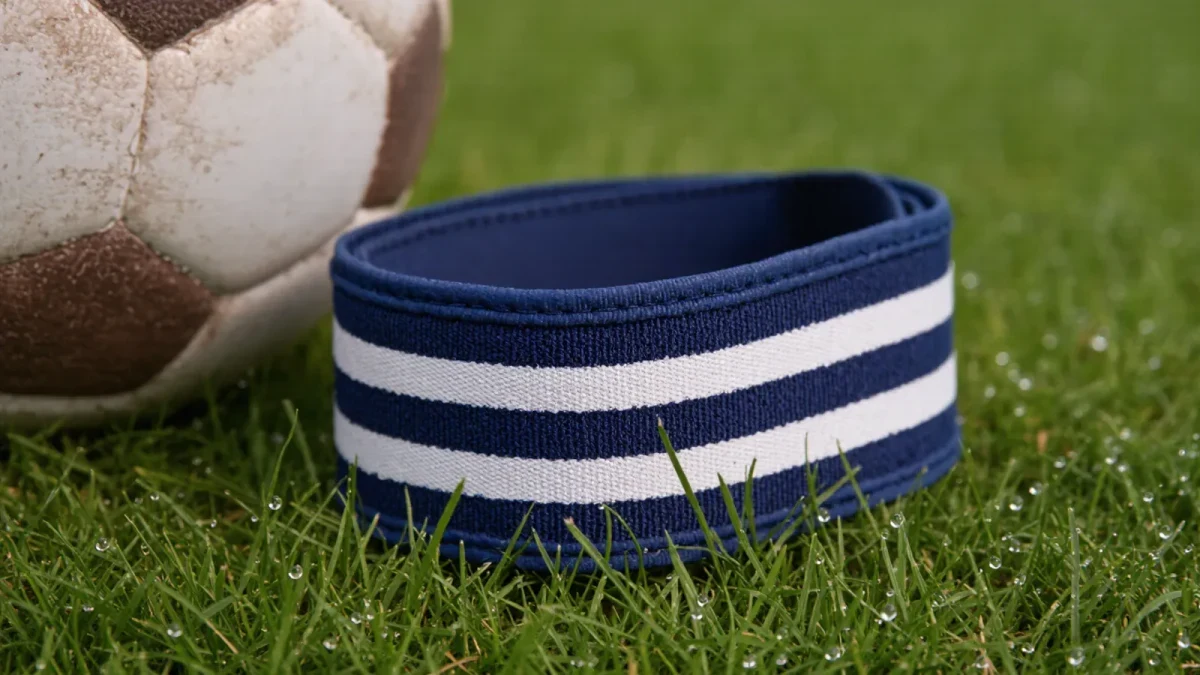
As a symbol, yes; as a job description, less. Captains handle fixed duties — coin tosses, referee communication, representing the team publicly — and those communication tasks are genuinely skilled: research on referee interaction and team composure links disciplined captain-refereree communication to fewer cards and calmer play, a finding replicated in soccer studies. But teams that treat captaincy as the leadership system, rather than one office in it, tend to concentrate influence in one player and lose the distributed networks the cohesion research favors. The strongest practical finding in the literature: develop several leaders, and choose the formal captain for conduct, not pedigree.
What behaviors show up again and again in effective captains?
Across the coaching literature and Walker's profiles, a short list recurs:
- Standards by demonstration: first to arrive, last to leave, never selective in effort — behavior teammates can copy without instruction.
- Upward communication: willingness to carry the locker room's honest state to coaches, and to absorb pressure rather than deflect it.
- Protection of the group: defending younger or fringe players publicly, correcting them privately.
- Emotional regulation: visible composure after errors; studies of team emotional contagion show leaders' reactions propagate.
- Bounded confrontation: addressing slippage directly, early, without humiliation.
Do teams pick captains badly?
Often, by the evidence. The default heuristics — best player, longest tenure, highest salary, biggest voice — all correlate weakly with the leadership behaviors the research values. Fransen's four-role studies found coaches' identification of team leaders matched the players' own identification barely half the time. Walker's historical cases add a pattern: several of his great captains were controversial choices at appointment — viewed as ordinary players or difficult personalities — who grew into the role precisely because they led through work rather than status.
Can leadership actually be developed, or is it innate?
Developed, mostly. Intervention studies in youth and collegiate sport — including leadership-development programs run across full seasons — report improvements in athlete leadership behaviors, team cohesion and even performance metrics, with effects strongest when programs give athletes real responsibilities rather than classroom content alone. The mechanism the researchers propose is practice: leadership behaviors are skills rehearsed under mild pressure, which is why teams that rotate duties through the squad graduate more usable leaders than teams that anoint one.
What makes the coach-captain relationship work?
Clarity of roles, in the research as in practice. Models of coach-athlete leadership describe a division of labor: the coach owns the program's direction, the captain owns the dressing room's daily reality, and the friction comes when either reaches across without invitation. Studies of elite teams that failed despite talent often surface a broken chain between bench and locker room — information not flowing, pressure not absorbed, standards policed from too far away. The captains Walker profiled frequently managed upward hard: relaying what the group would and would not accept, sometimes against the coach's initial preference, and the great coach-captain pairs in his cases were the ones where that traffic was welcomed. The practical instruction is communication architecture, not charisma.
Does captaincy mean the same thing in every sport?
No, and the differences are structural. In soccer and rugby the captain is a rules-mandated intermediary with the referee, which selects for composure and negotiation; in cricket the captain is a tactical decision-maker closer to an on-field coach, which selects for strategic depth; in North American professional sports the captaincy is largely symbolic-cultural, with leadership distributed across veteran hierarchies — hence alternate captains and leadership groups. Individual sports have no captaincy at all but still produce informal leadership in national-team training environments, which the athlete-leadership literature studies under the same frameworks. The research generalizes about behaviors — standards, protection, regulation — while the office itself varies by rulebook.
What should a first-time captain do in the first month?
The literature and Walker's profiles converge on a modest, concrete playbook:
- Define the job with the coach in one explicit conversation: what flows through the captain, what does not.
- Learn every teammate's individual situation — the Fransen research shows social-coordination work predicts cohesion as strongly as tactical leadership.
- Set two or three visible standards, early, and meet them yourself first.
- Establish private correction as the default; public defense of teammates as the reflex.
- Find the other leaders — task, motivational, external — and delegate to them on purpose.
None of it requires a speech. Most of it requires showing up.
The short version
The evidence favors unglamorous captains — durable, honest, protective, composed — embedded in teams with several leaders rather than one. If the research has one practical instruction for coaches, it is this: ask the players who they follow, and build the leadership structure around the answer.