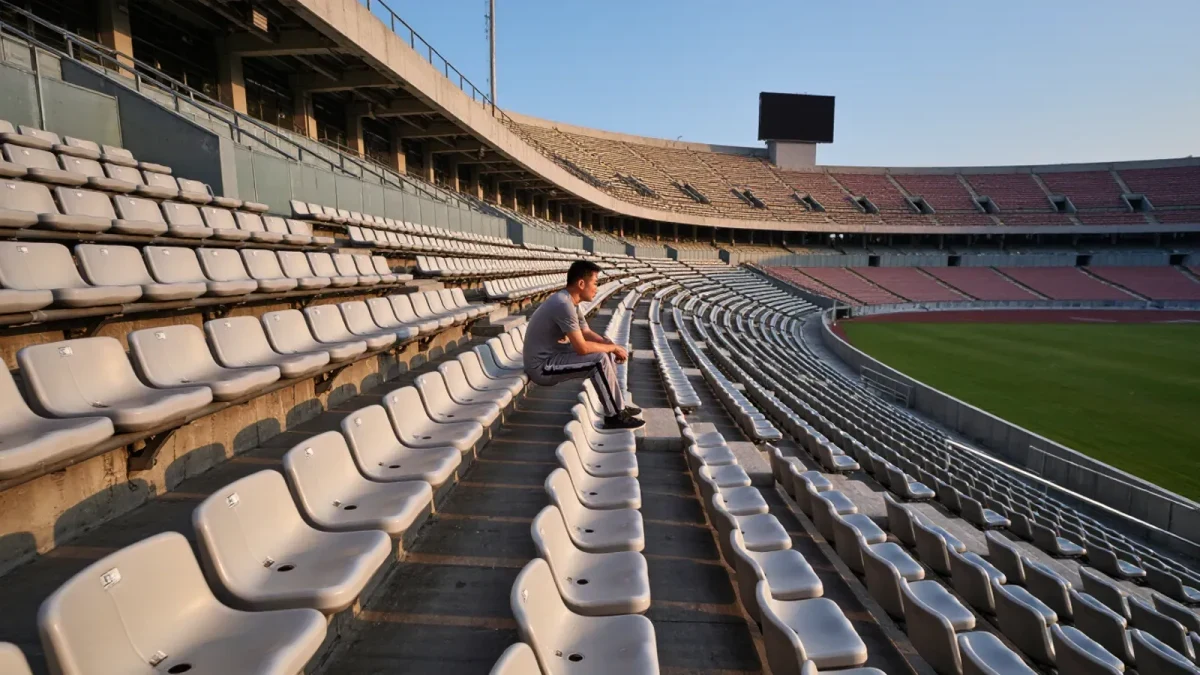
Athlete retirement is hardest when identity is narrow: research built on Britton Brewer's athletic identity work at Springfield College — including the Athletic Identity Measurement Scale he co-developed in 1993 — shows athletes whose self-concept is dominated by the athlete role adjust worst to retirement, especially when the exit is involuntary through injury or de-selection. The NCAA's own published data frame the odds honestly: fewer than two percent of college athletes go on to professional sport, meaning retirement from organized competition arrives for essentially everyone, usually decades before retirement from working life.
ELITE SPORTS MAG publishes information, not mental-health advice. Anyone struggling with retirement or transition should seek support from a qualified professional.
What is athletic identity, and why does it matter?
Athletic identity is the degree to which a person defines themselves through sport. Brewer and colleagues' 1993 paper defined the construct and gave researchers a measurement scale, and three decades of studies since link a strong, exclusive athletic identity to poorer retirement adjustment, higher distress and, in several cohorts, more emotional difficulty accepting the end of a career. The mechanism is straightforward: when one role supplies competence, community, routine and status at once, losing it removes all four simultaneously. Psychologists call the young-age version identity foreclosure — committing to a single identity before exploring alternatives — and sport is full of it by design.
Does voluntary retirement go better than forced retirement?
Consistently, yes. Studies of transitioning athletes — cohort and interview work in the sport-psychology literature — find planned, voluntary retirements associated with smoother adjustment, while exits forced by injury, cut lists or aging curves carry more distress and, in some studies, symptoms meeting clinical thresholds. Age complicates the pattern: athletes retiring very young (a gymnast at 22) face a longer identity rebuild than those retiring later (a golfer at 40), though later retirement can bring its own difficulty when sport has crowded out other roles for decades.
What do former athletes actually struggle with?
The research interviews recur on four losses. Structure: training schedules organized years of life, and its removal leaves a vacuum. Community: the locker room was a social world, and former athletes report loneliness at rates that surprise them. Identity and purpose: without results to anchor self-worth, many describe a period of drift. And the body itself: athletes retire with habits of monitoring, discipline and physical self-image that suddenly have no object. Studies of post-retirement health behavior are mixed — some former athletes stay highly active, others fall sharply — with the strongest predictor of continued activity being intrinsic enjoyment of movement rather than obligation.
What eases the transition, per the evidence?
Several factors appear across studies:
- Dual careers: athletes who maintained education or work alongside sport — a focus of European dual-career policy research — retire with identities already in place and adjust measurably better.
- Timing control: choosing the exit, or at least seeing it coming, ranks among the strongest protective factors in transition studies.
- Transferable framing: sport-psychology programs that teach athletes to name the skills they carry (discipline, feedback tolerance, composure) report better post-sport outcomes.
- Continued physical activity: not at training volume, but enough to preserve mood and health; exercise's mental-health effects are among the most replicated findings in psychology.
- Support networks beyond sport: partners, friends and communities outside the locker room buffer the community loss.
Is there life after sport at the elite level?
The data say yes, with nuance. Studies of former elite athletes generally find they do not regret the career and often outperform peers in later-life satisfaction and health — the Finnish longevity cohorts are the macro example. The difficult period is the transition itself, typically the first one to three years. Programs have formalized around this: player associations across professional leagues (the players' associations in soccer, North American leagues and Australian football among them) run transition programs combining education funding, career placement and psychological support, and evaluations of such programs report improved adjustment where athletes engage early rather than at the exit door.
What should a retiring athlete actually do?
General, evidence-aligned guidance from the transition literature: start the identity work before the last season ends; keep moving; treat the first year as a project with structure rather than a gap; use the player-association and alumni resources available in most leagues; and treat persistent low mood or anxiety as a health issue to raise with a professional, not a private failing. Information, not advice — the specifics belong to the athlete and qualified support.
What role does injury history play in retirement?
A large one, and not only as the mechanism of forced exits. Athletes retiring after injury-led careers report more difficult transitions in several studies, for a tangle of reasons: the decision was not theirs, the body ends in a medical chapter rather than a celebratory one, and unresolved physical problems complicate the active lifestyle that otherwise eases adjustment. Fear of re-injury is documented as a barrier to post-retirement activity even among healthy former athletes. The general information from the sports-medicine literature: the end of a career is a reasonable moment for a full physical inventory and a plan for training that no longer needs to win anything — which many former athletes describe as the first enjoyable training of their lives.
How do player associations actually help?
With money, structure and networks. The established associations — across North American leagues, European football, rugby and Australian football — typically fund education and retraining grants, maintain career-placement programs, and offer transition support that ranges from financial planning to psychological services. Program evaluations published in the sport-psychology literature report better post-retirement outcomes among athletes who engaged with these services before leaving rather than after, echoing the field's general finding that transition preparation works as prevention, not repair. The underused resource, association staff consistently say, is the alumni network: former athletes consistently rate contact with ex-players who made the crossing as among the most helpful supports available.
Is the research itself representative?
Increasingly, with gaps. Early transition studies skewed heavily male, Western and professional-team-sport, and the literature's reviews still flag women's retirement experiences, para-athletes and non-Western populations as under-studied. What exists for women athletes points to common mechanics — identity, voluntariness, support — with added structural factors: shorter earnings windows, later-career motherhood decisions intersecting with retirement timing, and fewer post-career coaching and media pathways. The honest state of the field: the core findings are solid because they replicate across very different populations; the margins are still being mapped.
The short version
Retirement from sport is a predictable, researchable transition, not a private anomaly. Narrow identity and forced exits predict difficulty; dual careers, chosen timing and support predict smooth ones. Nearly every athlete retires young. The ones who land best usually started building the landing years earlier.