The anabolic window — the idea that protein must be consumed within 30 minutes of a workout for muscle to grow — is mostly a scheduling convenience, not a physiological deadline: a 2013 review by Alan Aragon and Brad Schoenfeld concluded that post-workout protein timing produces small effects at most in trained people, while total daily protein intake, around 1.6 grams per kilogram of body weight per day according to a 2018 meta-analysis by Morton and colleagues, does the heavy lifting. The window exists, but it is measured in hours, not minutes.
How the minute-wide version became gym gospel is a story of whey marketing meeting a kernel of real physiology.
Where did the 30-minute window come from?
The kernel is real: resistance training sensitizes muscle to protein. After a session, muscle protein synthesis — the process of building new muscle tissue — responds more strongly to amino acids than it does at rest, and the elevation persists for at least 24 to 48 hours, as work by exercise physiologists including Luc van Loon at Maastricht University has shown using labeled amino acid tracers. Early studies in fasted subjects found that feeding right after exercise nudged the balance toward building rather than breakdown.
Two details got lost as the finding hardened into rule. The subjects were often fasted overnight, exaggerating the feeding effect. And supplement marketing, which had a shaker bottle to sell, compressed a multi-hour sensitization into a stopwatch countdown.
What did the Aragon and Schoenfeld review find?
Published in the Journal of the International Society of Sports Nutrition in 2013, the review examined studies comparing protein consumed immediately post-workout with protein consumed hours later. The verdict was measured: in trained subjects eating enough total protein across the day, timing made little measurable difference to muscle or strength gains. The window, they argued, is better understood as the entire period surrounding training — a meal one or two hours before works about as well as a shake immediately after.
Their practical framing still holds up: pre- and post-workout feeding overlap so much that agonizing over the clock is effort spent in the wrong place.
How much protein per day actually matters?
Morton and colleagues' 2018 meta-analysis of 49 resistance-training studies, published in the British Journal of Sports Medicine, located the plateau at roughly 1.6 grams per kilogram per day — about 110 grams for a 70-kilogram athlete — with confidence intervals stretching to about 2.2. Above that intake, additional protein produced no further measurable gains in muscle mass or strength across the pooled studies.
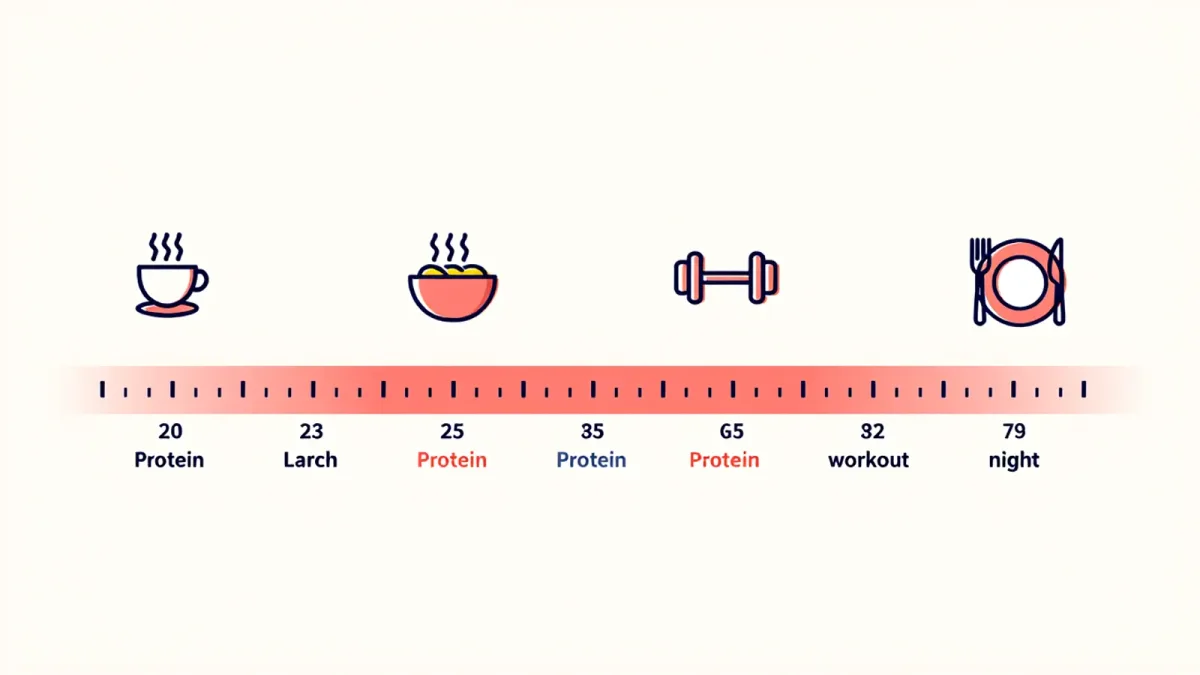
Distribution adds a modest layer on top: van Loon's group showed that spreading protein across roughly four meals of 0.4 grams per kilogram each keeps the building stimulus elevated through the day, versus front-loading or back-loading everything into one dinner. The effect is smaller than the daily total, but it costs nothing to structure.
Does protein before bed work?
Yes, with a small effect size. A trial from the Maastricht group published in 2015 had trained lifters consume about 28 grams of casein before sleep every night for twelve weeks; the pre-sleep group gained modestly more muscle and strength than controls — a real but unremarkable difference, in a trial of roughly 40 young men. It is a reasonable tactic, not a hinge point.
Do you need protein immediately after fasted morning training?
This is the one case where the clock argument regains force. Training after an overnight fast means the muscle's building blocks are running low, and the post-training meal becomes the first feeding in many hours. Here, eating within an hour or so plausibly matters more — the Aragon and Schoenfeld review acknowledged that fasted training narrows the practical window. Even then, breakfast on the drive home covers it.
The leucine threshold — the dose of the amino acid leucine needed to flip on muscle building — is met by roughly 20 to 40 grams of quality protein per meal, which most mixed meals reach without engineering.
What about carbs in the window?
Carbohydrate timing is a separate question with a separate answer: it matters mainly when the next session is close. Glycogen — the storage form of carbohydrate in muscle — refills over 24 hours on adequate intake regardless of timing, but athletes training twice a day or competing in tournaments benefit from starting glycogen refill immediately, a finding consistent across sports-nutrition position stands. For a lifter training three evenings a week, carb timing is nearly irrelevant.
Practical rules that survive the evidence
- Eat 1.6 to 2.2 grams of protein per kilogram per day; this dominates everything else.
- Space it across three to five meals containing 0.4 grams per kilogram or so each.
- Have protein within a few hours before or after training; precision beyond that buys almost nothing.
- After fasted training, eat sooner rather than later.
- Pre-sleep protein is a modest bonus, not a requirement.
Does protein source change the equation?
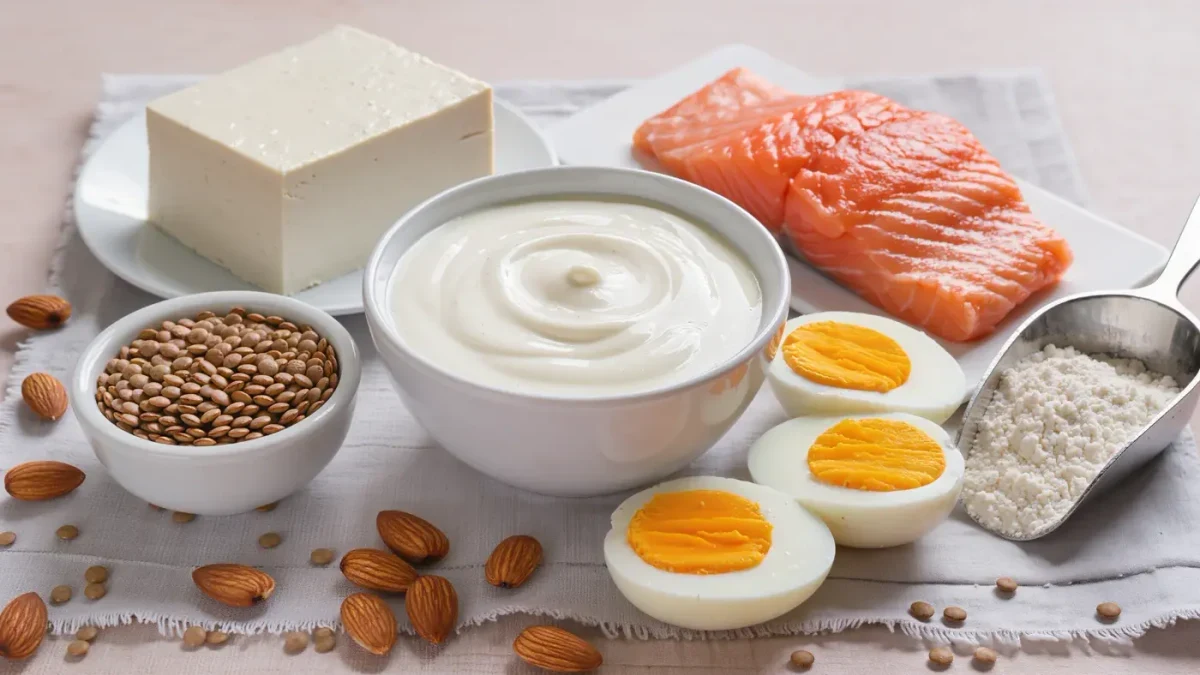
Mostly no, with one caveat about leucine content. Animal proteins — meat, dairy, eggs — hit the leucine threshold with smaller servings, while plant proteins, lower in leucine per gram, need roughly 20 to 30 percent more total protein per meal to trigger the same building response, per dose-response work from research groups including van Loon's. The difference is a matter of quantity, not quality: a larger serving of beans, lentils or blended plant proteins closes the gap.
Blended meals make the question largely academic. A dinner of rice, vegetables and a reasonable portion of beans or chicken supplies the needed amino acids without any supplementation, and the post-workout window forgives ordinary meal timing as long as the daily total stands.
The bottom line
The anabolic window is real in the sense that trained muscle stays sensitized to protein for up to two days, and generous in a way the shaker-bottle era never advertised: hours wide, forgiving of missed deadlines, and subordinate to the daily total. Athletes who fix total protein first and stop watching the clock have optimized the part of the equation the evidence actually rewards. The primary studies are catalogued on PubMed.