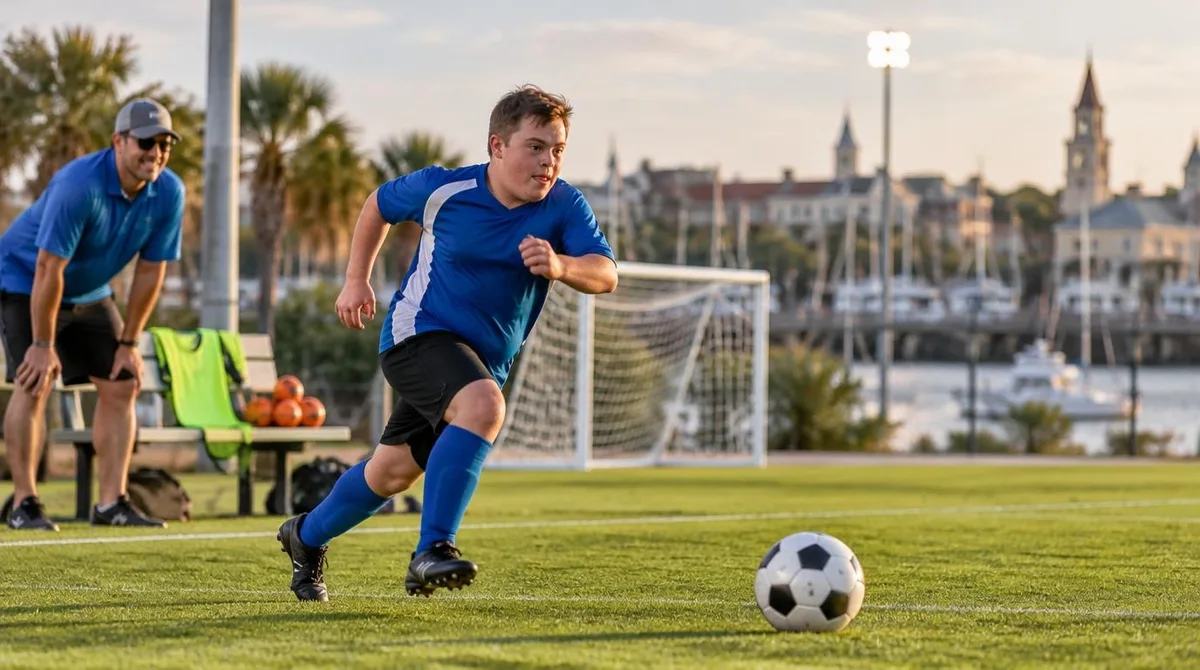
Conway, South Carolina, hosted a Special Olympics competition on October 31, 2026, bringing athletes from counties across the state to the Conway Sports and Fitness Center for bocce, flag football and soccer. The event was organized by Conway Parks and Recreation and, per the local report on it, took about six months to put together. The honest second opinion: this is a modest, well-run local story, not a landmark one — and its real value sits in a few details most coverage would skip.
The reporting itself is thin in places worth naming. WPDE's account of the Conway competition gives no athlete count, no final scores and no list of which counties placed where. That is normal for a same-day local story, but it means readers should treat the day's scale as unverified. What the report does support — the sports offered, the six-month preparation window, the volunteer structure and the named quotes — is enough to say something useful about how events like this actually work.
What actually happened in Conway
Conway Parks and Recreation hosted the competition at the Conway Sports and Fitness Center, with teams representing counties from across South Carolina. Three sports were on the program: bocce, flag football and soccer. Volunteers included football and soccer players from Conway High School, alongside center staff.
One organizational detail stands out. Organizers worked to ensure every athlete had a way to compete — someone running alongside an athlete who needed a guide, or helping push a wheelchair. That is the unglamorous logistics work that decides whether an inclusive event is genuinely inclusive or merely announced as such. Patsy Baker, a sensory special needs coordinator, put the philosophy plainly: "Our sport is for everybody. There is not one that says, 'Oh, I can't do that.'"
Is 'community over medals' a real outcome or just a theme?
The report leans on the idea that the day emphasized "achievements beyond winning medals," and a skeptic is right to pause there. That phrase appears in a lot of youth and adaptive sports coverage, and it can be a soft way of papering over thin competition. Two details in this case argue the framing is more than boilerplate.
First is longevity. Coach Kathy Covington and another coach have worked with some of the same soccer players since they were 10 years old, and have coached the team for 38 years. You do not get that kind of continuity from a one-day photo opportunity. Second is what the athletes themselves said. Soccer player Timothy Roseboro described the group as family: "We feel like family, our crew, like everybody kind of is, like, relatable to one another. Like, we've all seen each other grow." That is a relationship claim, and it is one the reporting treats as the story's center, not a garnish. Readers following this should also see Fitness Classes Near Me: What to Expect From Your First Group Fitness Class. We covered a connected angle in Fitness Classes Near Me: What to Expect From Your First Group Fitness Class.
The trade-off worth naming: a day built around belonging will produce fewer measurable performance outcomes than a results-first meet. For this population, in this setting, that trade looks defensible — but it should be stated, not assumed.
What the coaching quote gets right
Covington's line — "I've learned perseverance, perseverance from our players because they've been really good. They might be down, but they never quit" — risks reading as motivational filler. Read it against her record and it reads differently. Thirty-eight years coaching the same program means she has watched a full arc of athletes develop, plateau and age through the sport. Her claim is about what the players taught her, which is a more credible position for a long-tenured coach than a claim about results.
There is a broader lesson here for any coach or recreational athlete, and it comes from the Conway program itself rather than from research data: according to WPDE, the athletes described years of playing together as building relationships that feel like family, and organizers said the goal is to keep opportunities open so athletes of all abilities have a place to compete. Conway's program is a working example of that continuity at the community level. We covered a connected angle in Group Fitness Classes and Adherence: What the Data Shows.
What this means for training-minded readers
For coaches and athletes reading this through a performance lens, the transferable points are structural, not inspirational. The six-month preparation window shows what competent event logistics cost. The athlete-by-athlete participation accommodations show what genuine inclusion requires in practice: a plan per person, not a policy per event. And the multi-decade coaching tenure shows what athlete development looks like when nobody is in a hurry.
Readers looking for more on how structured training supports athletes at every level can start with our training section or our profiles of athletes across sports. General fitness readers will find the broader context in our fitness hub.
What remains unknown
The report leaves real gaps. We do not know how many athletes competed, which counties won what, whether this Conway event is annual or new, or what the next competition date is. Organizers said the goal is to keep opportunities open so athletes of all abilities have a place to compete, and the athletes plan to keep practicing toward their next chance at gold. Those are intentions, not confirmed dates. If a follow-up report supplies numbers or a schedule, the measured verdict stays the same: a small event, run with more care than its coverage suggests, and worth watching rather than celebrating on faith.
This article reports on a community sports event and is information, not training or medical advice; athletes and families making participation decisions should work with their coaches and qualified professionals.