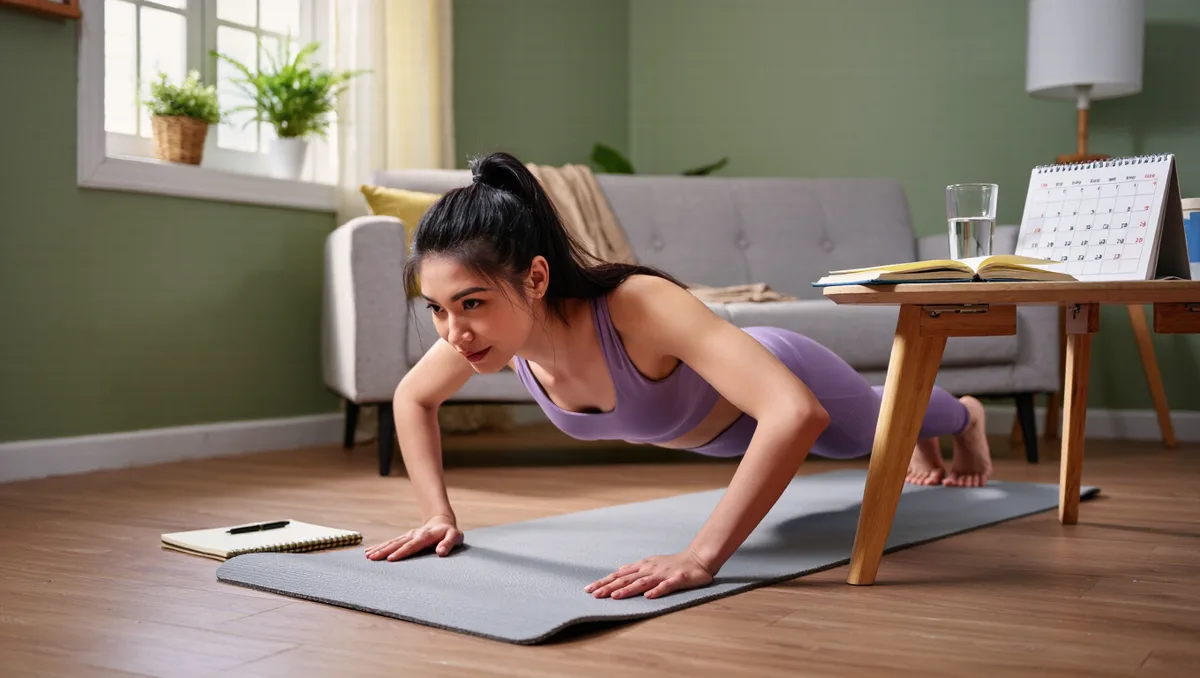
Expect a guided hour, not an audition. A first group fitness class follows a set arc: a warm-up, a main block of work, and a cool-down, with an instructor calling out each move. Nobody grades the first attempt. A 2026 meta-analysis of 71 trials found group formats give only a small edge over training alone — the real draw is structure.
That structure explains why gyms keep adding studios. A newcomer gets a plan, a clock, and a coach for the price of one visit, and the fitness section on this site collects more primers on the basics.
Preparation is logistics, not drama. Bring water, pick shoes that match the format, and arrive ten minutes early. Tell the instructor it is a first class; good ones watch quietly and adjust. New movements often leave mild soreness, and a planned lighter week is the standard reset, as explained in Deload Weeks: When and Why Athletes Scale Back.
What Happens in a Typical Class, Minute by Minute?
Most formats share one skeleton. An opening routine sets the tone and rehearses the moves; the main block carries the workload; a closing routine brings breathing back down. Researchers who mapped group-based exercise describe exactly this predictability: fixed time and place, consistent session scripts, recurring milestones. That design lowers the mental cost of showing up.
- A short warm-up that rehearses the day's moves.
- A main block of strength, cardio, dance, or mobility work.
- A cool-down that returns breathing and heart rate to normal.
Formats change the music, the equipment, and the vocabulary. The skeleton rarely moves.
Will Everyone Notice You Are New?
No, and the room stays busy with its own work rather than anyone's form. Instructors expect first-timers and typically offer easier versions mid-stream, so the modification arrives without a spotlight. Design research on group exercise places psychological safety and non-judgmental norms near the center of a workable class; a room where beginners feel graded stops working as a group. Readers following this should also see Rucking: What the Research Actually Says.
Practical etiquette is short. Wipe down equipment, keep phones off the floor, and save long questions for the end. Standing toward the back is a time-honored tradition, not a red flag.
Do Classes Actually Keep People Coming Back?
The honest answer is that classes help, and the effect is modest. The 2026 meta-analysis pooled 71 trials with more than 22,000 participants. Group conditions held a small, statistically uncertain edge for activity levels and a small edge for functional outcomes such as strength and flexibility once outliers were removed. Group formats are a reasonable bet, not a proven multiplier.
What separates people who stay may be confidence. A 2026 systematic review of 21 studies of adult group fitness classes found self-efficacy — a person's belief in handling the task — the most consistent predictor of attendance, with small-to-moderate associations near r = 0.34. One included contrast reported a 28-percentage-point attendance gap between higher and lower confidence groups, drawn from observational work rather than trials.
Enjoyment helped most when measured close to the attendance decision, and the review flagged heterogeneous, mostly observational evidence. One review is a map, not a verdict.
How Do You Pick the Right First Class?
A search for "Fitness Classes Near Me" will list every studio within driving distance, and the list never says which room suits a beginner. Filter by three signals instead: a level label that says beginner or all levels, a shorter listed class length, and an intro offer that prices the first visit low. Trial passes exist for a reason.
Format matters less than fit. Strength circuits suit people who like numbers; dance cardio suits people bored by numbers; yoga suits people who want quiet with their work. Certified instructors display credentials, and asking about experience with beginners is a fair question at any front desk. The best class is the one the week can hold twice.
Conclusion: A Plain Plan for Class One
Book a beginner-labeled session, arrive early, and say it is a first class. Follow the arc as it comes, take the easier version of any move, and judge the hour by one question: could this fit the week twice? Repeat that, and attendance starts to run on its own.
This is general information, not individualized advice — a physician or a certified instructor should guide personal decisions, especially with an injury or a health condition on file. Everyone else can treat class one as what it is: a rehearsal, not a verdict.