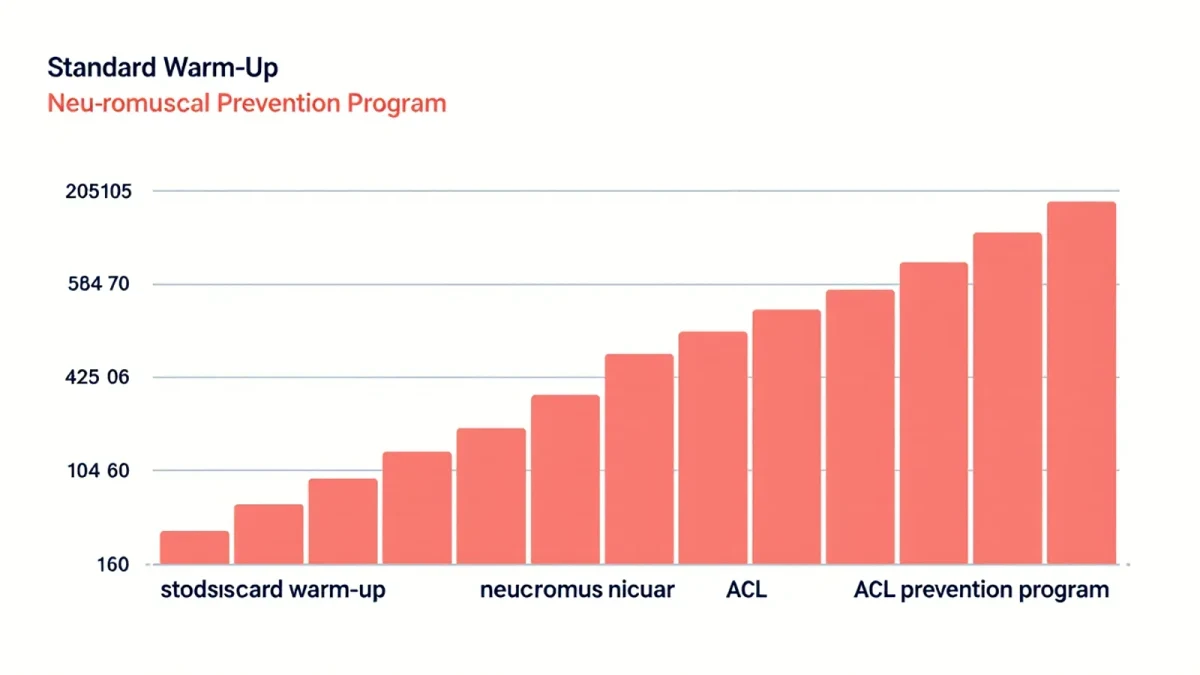
Structured neuromuscular training programs reduce anterior cruciate ligament (ACL) injuries in female athletes by about 50 percent in team-sport trials, with some meta-analyses reporting even larger reductions when programs are done at least twice a week across a full season. That is the headline finding of more than a decade of intervention research, including large analyses by Daehan Won and colleagues and by Matthew Soligard's research group on the FIFA 11+ warm-up. The evidence is unusually consistent for a training intervention.
Nothing here diagnoses an injury or prescribes rehabilitation; an injured athlete needs a clinician.
Why is ACL risk higher in female athletes?
Female athletes in cutting and landing sports — soccer, basketball, team handball — tear their ACLs at two to eight times the rate of males in the same sports, per injury-surveillance data compiled by the National Institutes of Health and multiple collegiate registries. The explanatory research points mostly to mechanics, not anatomy alone: on average, women land with more knee valgus (the knee collapsing inward) and less hamstring recruitment, and biomechanical studies show this landing pattern loads the ACL directly. Anatomical and hormonal factors are discussed in the literature, but the factors a program can change — strength, landing technique, movement patterns — account for the successful interventions.
What is actually in an effective prevention program?
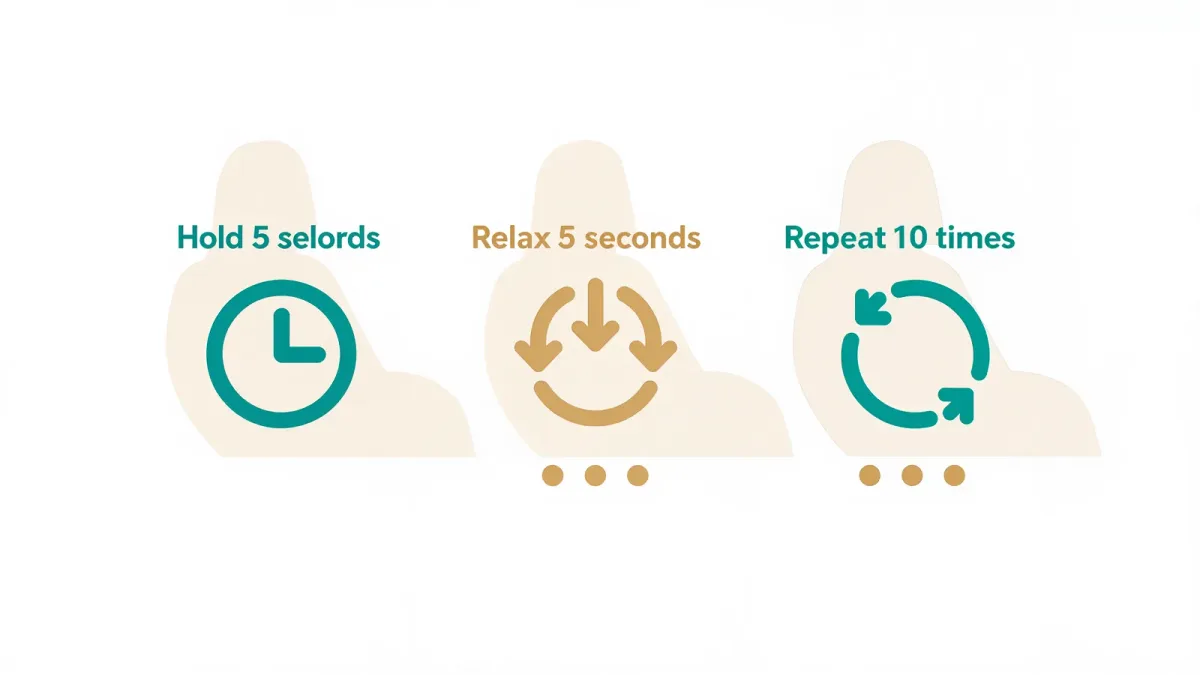
The tested programs look mundane: 15 to 20 minutes replacing the generic warm-up, two to three sessions per week, all season. The FIFA 11+ — developed by a research group led by the FIFA Medical Assessment and Research Centre and studied across thousands of players — runs through running drills, strength work (Nordic hamstrings, squats, planks), plyometrics, and cutting technique with feedback. A distilled version of what the trials tested:
- Landing mechanics: jumps and drop-landings with explicit coaching to keep knees aligned over toes, hips back.
- Hamstring-dominant strength: Nordic curls and bridges, since hamstrings protect the ACL by restraining forward shin slip.
- Plyometric progression: jumping volume built gradually so tissue adapts to landing forces.
- Agility with decision-making: cutting drills that rehearse deceleration under game-like uncertainty.
How large is the effect, honestly?
Large for a warm-up swap. Meta-analyses of neuromuscular programs in female team-sport athletes report risk reductions near 50 percent overall, and higher — in some analyses around two-thirds — for non-contact ACL injuries when compliance exceeds roughly two sessions per week. Two caveats belong with those numbers. First, the trials' compliance varied widely; real-world teams that run the program sporadically get proportionally less protection. Second, absolute risk for any individual athlete remains low in a season; the reduction is meaningful at the squad level, where one avoided ACL can save a roster's year and an athlete's nine to twelve months of rehabilitation.
Why do so few teams actually do this?
Compliance research gives a blunt answer: the program works only while it is done, and adherence decays once supervision drops. Studies of the 11+ in community soccer found teams that received a coaching workshop and regular follow-up kept doing the program, while teams handed a laminated card drifted back to old warm-ups within weeks. Effective implementation — coach education, scheduled sessions, seasonal reminders — is treated in the implementation-science literature as part of the intervention itself.
Does screening identify who needs the program?
Not reliably. Screening tests such as the drop-jump test identify group-level differences in landing mechanics, but validation studies show they predict individual ACL injury poorly — most athletes flagged as "high risk" never get injured, and many who tear their ACLs screened cleanly. The research consensus has moved toward universal programming: everyone does the neuromuscular work, because picking individuals out does not yet work well enough to build policy on.
What about after an ACL reconstruction?
Return to sport is a clinical decision built on strength recovery, hop-test symmetry and readiness criteria — general information only, and beyond this article's scope. One research point worth knowing: reinjury rates after ACL reconstruction are substantial, particularly in young athletes returning to pivoting sports, which is why return-to-sport testing batteries and continued prevention work after return are standard in the sports-medicine literature.
Do these programs help male athletes too?
Yes, though the effect sizes are best documented in female cohorts, where baseline risk is higher and trials concentrated. Meta-analyses that pool both sexes still find meaningful risk reductions — commonly in the 30 to 50 percent range — for neuromuscular warm-up programs in male team-sport players, and the biggest implementation success story, the FIFA 11+ rollout, was studied largely in mixed and male youth populations. The practical logic holds for both sexes: if landing mechanics and hamstring strength protect the ligament, the mechanism is not sex-specific. What differs is the starting risk, which is exactly why most prevention research dollars and most policy attention have focused on female athletes.
How long before a prevention program starts working?
Faster than most teams assume. Biomechanical studies of landing mechanics show measurable changes in knee valgus and hamstring activation within four to six weeks of coached neuromuscular work — movement patterns adapt before strength does. The injury-reduction evidence, though, comes from season-long programs, and analyses that separated adherence levels found the protective effect concentrated in teams completing the program throughout the full season, not just the opening weeks. The sensible reading for a coach: start before the season, keep it running after results appear, and treat the warm-up as the program rather than the prelude to one.
Are these exercises safe for adolescent athletes?
Yes — the largest trials were run in youth and adolescent populations, including the cluster-randomized studies behind the FIFA 11+, which followed thousands of teenage players. Reported adverse events in those trials were rare and minor, mostly muscle soreness during the first weeks. Two general-safety notes from the literature: plyometric volume should progress gradually in athletes with no jumping background, and any athlete with a history of knee problems should be cleared by a clinician before starting a new program. That is general information, not a medical clearance — which no magazine can provide.
What does a sample weekly structure look like?
General shape only, drawn from the published program templates — a full session list and its progressions belong to a qualified coach or clinician. A typical week in the trials: one full 20-minute neuromuscular session at the start of the week covering running drills, strength and plyometrics with feedback; one or two shortened 10 to 15 minute versions before other sessions, prioritizing landing mechanics and cutting; and one match day preceded only by the standard activation work. Across a season that accumulates to a few thousand rehearsed decelerations and landings — the repetition count researchers consider the active ingredient, not any single exercise.
The short version
The best-supported answer in ACL prevention is unglamorous: a structured neuromuscular warm-up, done at least twice a week, all season, coached with feedback. The trials cut injury risk roughly in half. The hard part is not the exercises — it is the doing.