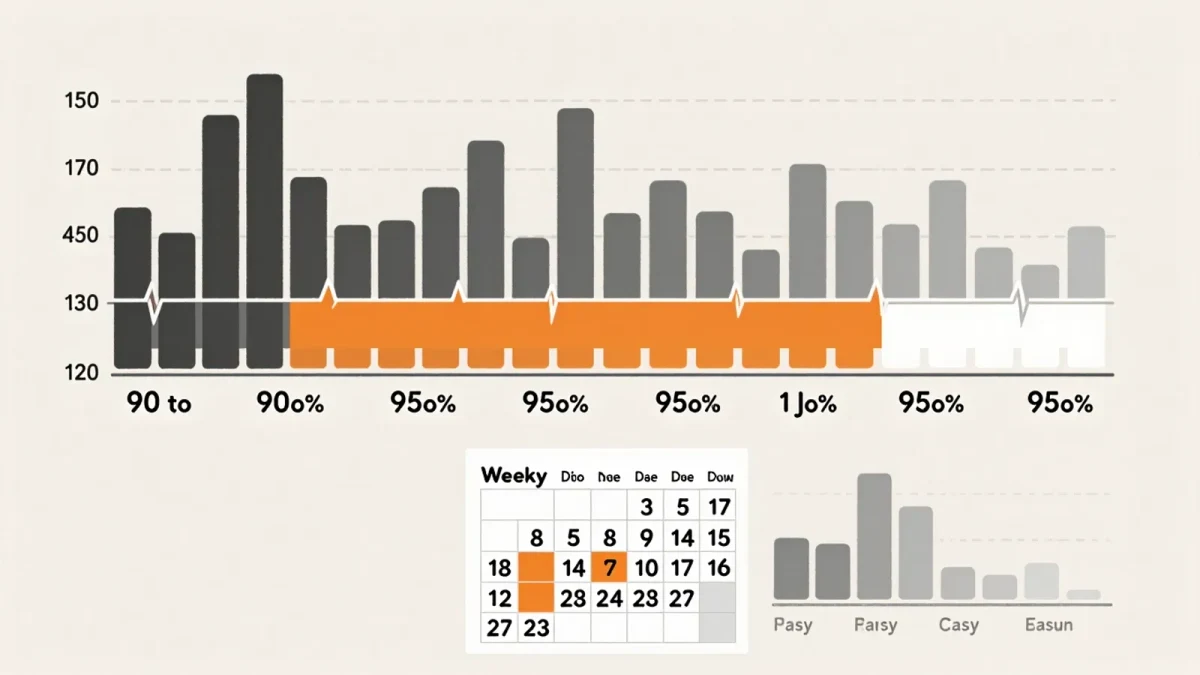
VO2 max, the maximum amount of oxygen your body can use per minute, is trainable to a meaningful degree: adults typically improve 10 to 20 percent with dedicated training, and the protocols that produce the largest gains are interval-based. In the widely cited work of Jan Helgerud and colleagues at the Norwegian University of Science and Technology, published in 2007, aerobic interval training at about 90 to 95 percent of maximum heart rate increased VO2 max by around 8 percent, significantly more than continuous moderate running at the same total workload, which improved it by under 4 percent. Genetics sets a ceiling nobody chooses, but most people are living well below theirs.
Maximal-effort testing and training stress the heart; readers with cardiac risk factors should be cleared by a qualified professional first.
What Is VO2 Max and Why Does the Number Matter?
VO2 max is the ceiling on aerobic performance: the product of how much oxygen-rich blood your heart can pump and how much of that oxygen working muscle can extract. It is expressed relative to body weight, milliliters per kilogram per minute, which is why the same absolute engine scores differently across body sizes. Typical values for sedentary young adults sit near 35 to 45; competitive endurance athletes run 60 to 80 and above; elite cross-country skiers have recorded the highest tested values.
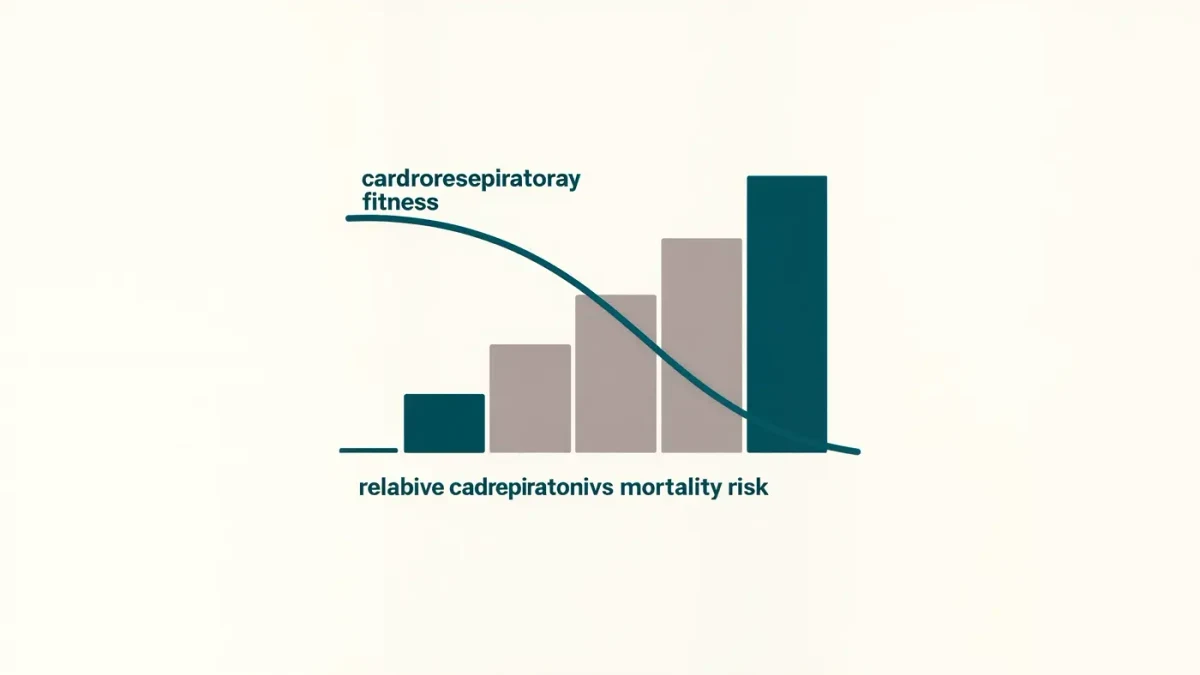
The number matters beyond sport. Large clinical cohort work, most prominently the Cleveland Clinic analysis by Jaber and colleagues of over 120,000 patients published in JAMA in 2018, found cardiorespiratory fitness was inversely associated with all-cause mortality, with the relationship steep at the low end: the lowest-fitness group carried several-fold higher mortality risk than the elite-fitness group, and the gap between poor and average fitness was larger than the gap between average and elite. As of that analysis, low fitness was described as the strongest modifiable mortality predictor the dataset contained.
How Much Can You Really Improve?
The honest range is wide because the baseline is wide. Classic exercise-science textbooks, drawing on heritability and training studies, attribute roughly half of VO2 max variation to genetics. Responsiveness varies several-fold between individuals in standardized training trials, a phenomenon the HERITAGE Family Study documented directly: the same 20-week program produced nonresponse in a minority and large gains in others, with family clustering. Sedentary beginners commonly gain 15 to 20 percent in three to six months. Already-trained athletes fight for single digits per year. Age erodes the ceiling roughly 10 percent per decade after 30 in non-training adults, and training slows but does not stop that decline.
What does not happen: tripling your VO2 max, or buying a large gain from any supplement, breathing gadget, or hack. The improvement comes from the heart's stroke volume and the muscles' oxidative machinery, and both require progressive aerobic stress.
Which Training Protocol Works Best?
Head-to-head comparisons converge on high-intensity intervals, with the Norwegian 4x4 the best-tested template: four minutes at 90 to 95 percent of maximum heart rate, three minutes of easy recovery, repeated four times. Helgerud's 2007 study compared formats with equal total work and found the 4x4 and a 15/15 second interval scheme both beat continuous moderate running for VO2 max gains. Follow-up research, including Wisloff's cardiac-rehabilitation trials, reproduced the pattern in clinical populations with greater effect sizes, a 17 percent improvement in peak oxygen uptake in interval-trained heart-failure patients versus single digits for moderate continuous training. Sprint interval protocols, 30-second near-maximal efforts with long rests, also raise VO2 max effectively in low-volume formats, per the McMaster University research tradition.
| Protocol | Structure | Typical weekly dose |
|---|---|---|
| Norwegian 4x4 | 4 min at 90-95% HRmax, 3 min easy, x4 | 1-2 sessions |
| 15/15 intervals | 15 sec hard, 15 sec easy, x20+ | 1-2 sessions |
| Sprint intervals | 30 sec all-out, 2-4 min rest, x4-6 | 1 session |
| Continuous moderate | 20-60 min at 60-70% HRmax | 2-4 sessions, base work |
The table hides the interaction that matters: intervals deliver the peak stimulus, and continuous easy volume delivers the durability and recovery capacity that let you absorb intervals. Programs in the trial literature almost always sit both on top of an aerobic base.
How Long Do Gains Take, and How Do You Keep Them?
Measurable change shows in about 8 to 12 weeks of consistent work, the window most training studies use. Detraining is faster than training: VO2 max begins declining within about two weeks of stopped training in bed-rest and detraining studies, with meaningful losses by two months. Maintenance requires less than building: research on reduced training shows a substantial share of VO2 max can be held with a fraction of the volume if intensity is preserved, the same taper logic endurance athletes exploit.
How Should You Test Your VO2 Max?
The gold standard is a graded maximal test with gas-exchange analysis in a lab, increasingly available at universities and sports-medicine clinics. Field estimates substitute well: a timed effort such as a 1.5-mile run plugged into established equations, or the widely used Cooper 12-minute test, tracks lab values within a few points for most people. Wrist-wearables estimate VO2 max continuously; validation studies against lab testing generally find reasonable group-level accuracy with meaningful individual error, which makes them useful for watching trends and poor for absolutes. Test conditions should be consistent, same protocol, similar sleep and heat, because a single reading carries several points of noise.
What Does a Sample Build Look Like?
For a runner with a modest base wanting a higher ceiling, a well-supported twelve-week arc looks like this: weeks one through four, three easy runs plus one 4x4 session, establishing rhythm and measuring a field-test baseline; weeks five through nine, two interval sessions, alternating the 4x4 with shorter 15/15 work, on top of two easy runs and one longer easy effort; weeks ten and eleven, hold the pattern while watching recovery markers; week twelve, reduce volume by about half, keep one interval session, and retest on fresh legs. The structure borrows directly from the trial protocols, and the final light week applies the taper finding that performance, and test day is a performance, peaks when volume falls while intensity survives.
What Else Moves the Number?
Body weight is the quiet lever: because the score is relative to kilograms, losing nonfunctional mass raises the number without changing the engine. Hemoglobin mass, altitude exposure, and iron status all shift oxygen-carrying capacity, which is why altitude training has a real, evidence-backed place in endurance preparation and why iron deficiency, disproportionately common in active women, quietly caps aerobic gains. Sleep and total stress manage the adaptation side. None of these replace the training stimulus; they tune the machine the training builds.
The Bottom Line
VO2 max improves by roughly 10 to 20 percent for most adults who train for it, with intervals near 90 percent of maximum heart rate as the best-evidenced stimulus and easy aerobic volume as the platform underneath. The number is one of the strongest health markers measurable, the ceiling on endurance performance, and, unlike most ceilings, one you can raise for decades with the work almost everyone is able to do and few actually schedule.